I. Are a gemstone’s transparency and refractive index important?
Transparency and refractive index are key parameters for evaluating gemstones.
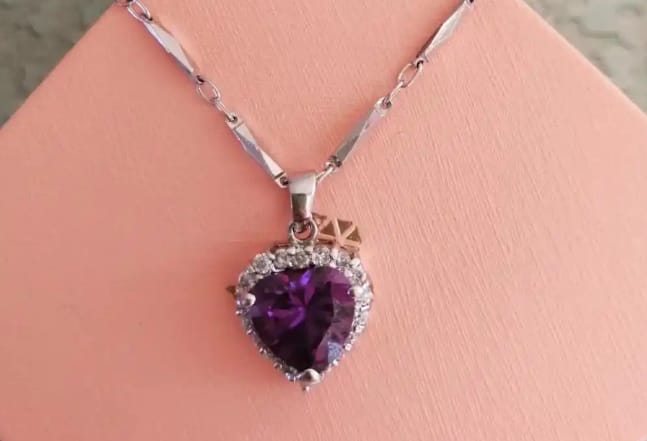
In gemology, transparency is categorized into four levels:
1. Transparent 2. Semi-transparent 3. Sub-translucent 4. Opaque
Refractive Index: According to the law of refraction, a gemstone’s refractive index is the ratio of the speed of light in air to the speed of light within the gemstone.
II. How can natural gemstones be distinguished from dyed ones?
1. Natural gemstones possess a characteristic “gem-like luster” (or liveliness), whereas dyed gemstones often appear dull or lifeless.
2. Natural gemstones exhibit variations in color tone with natural transitions, while dyed gemstones tend to have a uniform, flat color.
3. When viewed from different angles, natural gemstones display a play of colors (exhibiting multiple hues), whereas dyed gemstones often look “fake.”
4. There is a significant price difference between natural and dyed gemstones. Collectors should be wary if a gemstone is exceptionally vibrant yet very inexpensive.
5. In many cases, collectors need to seek assistance from professional institutions; scientific instrument analysis is required to reach a definitive conclusion.
III. Is a high-magnification loupe necessary for examining jewelry?
Using a loupe (magnifying glass) is a very common method for examining jewelry; it is simple to use and highly portable. However, a common misconception is that higher magnification always yields a clearer view. In the jewelry industry, a 10x loupe is the standard tool for examination. IV. Jewelry comes in a wide variety of types; what aspects are generally used for identification?
1. Color
2. Transparency
3. Luster/Brightness
4. Pleochroism (color variation from different angles)
5. Refractive index
6. Specific gravity (density)
7. Double refraction (doubling of images)
8. Hardness
V. What are the common tricks used when purchasing jewelry?
1. Passing off fakes as genuine
Dyed jewelry is often passed off as natural jewelry.
2. Passing off inferior goods as high-quality ones
Taking jadeite as an example, unscrupulous merchants may sell “B+C” or “C” grade jadeite to consumers as natural “A” grade jadeite.
3. Price deception
Unscrupulous merchants often exploit the consumer’s desire to bargain by offering steep discounts, when in reality, the price has not actually been reduced significantly.
4. Unclear or incomplete labeling
When selling jewelry, unscrupulous merchants often provide incomplete identification certificates to “prove” the item is natural. If a consumer insists on a comprehensive certificate, the merchant may stall with various excuses and then offer a discount, making the buyer feel like they have secured a great bargain.
5. Exaggerated claims
When consumers hesitate to make a purchase, unscrupulous merchants may exaggerate the jewelry’s qualities—often making false health-related claims, particularly to the elderly. Other tactics include claiming a discount is valid for one day only or warning that the price will rise the next day; the ultimate goal is to pressure the consumer into making an immediate purchase.
VI. Are natural rubies completely free of flaws?
It is extremely rare to find a natural ruby that is entirely free of flaws or cracks. However, the color of artificial gemstones is extremely uniform and dazzling, with virtually no visible flaws.
VII. How do you identify a natural sapphire?
Characteristics of sapphire:
1. Uneven color distribution.
2. Presence of silk-like inclusions within the stone.
3. Strong pleochroism.
VIII. What should be considered when purchasing emeralds?
1. Emeralds often have many flaws and are brittle/prone to cracking.
2. Emeralds generally lack high clarity; internal “dragonfly wing” inclusions are common and serve as a key indicator of natural emeralds.
3. Natural emeralds have uneven color, whereas imitations are often flawless and uniform in color.
4. Prices vary by origin; Colombian emeralds offer the best quality and color.
IX. How do you select tourmaline?
When buying tourmaline, look for stones with vivid color, high transparency, and minimal impurities. Peach-pink and green-blue are considered high-end hues.
X. Does the presence of small insects inside amber indicate it is natural?
Many collectors mistakenly believe that the presence of small insects implies the amber is ancient. In reality, modern forgery techniques are constantly evolving, and many insect inclusions can be artificially created.
XI. Why does the color of beeswax amber (honey amber) darken over time?
Both amber and beeswax amber darken with age; the older the piece, the thicker the surface oxidation layer and the deeper the resulting color.
XII. How do you identify gold jewelry?
1. Gold jewelry rarely changes color. 2. Under comparable conditions, gold is heavier than metals such as silver, tin, and lead. The density of gold is 19.32 g/cm³.
3. When struck, gold jewelry produces a low, dull sound and lacks elasticity.