Having worked in the jewelry industry for so many years—though I wouldn’t claim to be a master or boast of major achievements—I feel qualified to share my thoughts on this topic. If you agree, I’d appreciate a “like”; if not, feel free to treat this as a bit of light entertainment. I welcome rational discussion but have no time for trolls or contrarians.
Before answering the question, let’s clarify: what exactly qualifies as “jewelry”? Generally speaking, jewelry refers to crafted objects or ornaments made from materials that are valuable and relatively rare—such as gold, silver, and various gemstones. This definition distinguishes jewelry from ordinary accessories (like low-cost items made of base metal alloys set with cubic zirconia). Overall, jewelry commands a higher value than ordinary accessories and possesses a greater degree of scarcity.
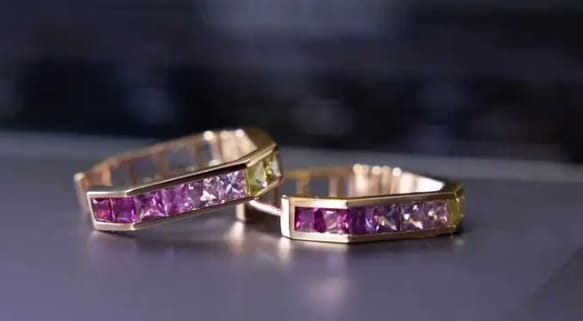
Ordinary accessories are not necessities of life; they merely satisfy the desire for personal adornment. This is even more true for jewelry, which sits a tier above ordinary accessories—indeed, many people go their entire lives without ever owning a single piece of jewelry. Since jewelry is not a necessity, this brings us back to the article’s central question: why do people buy it?
1. The instinct to pursue scarcity is the fundamental logic behind buying jewelry.
Humans are creatures that seek out scarcity—and *only* scarcity. Given the limited supply of various resources, the pursuit of scarcity is practically hardwired into human instinct. Scarcity is the common thread underlying our vastly different pursuits; it is the shared characteristic of what we desire. While scarcity doesn’t tell us *what* specific objects people pursue, it reveals a shared trait among them: to the seeker, they are scarce. This perspective forms the underlying logic of jewelry consumption.
The scarcity of jewelry is evident, first and foremost, in its materials. The history of jewelry dates back over 7,000 years to the Sumerian civilization. At that time, before the advent of metal smelting technology, natural gold was incredibly rare; using it as a material for jewelry naturally imbued the finished pieces with that inherent scarcity. Throughout the history of jewelry, a wide array of rare materials—particularly gemstones such as diamonds, rubies, sapphires, and emeralds—has been utilized in their creation. The most immediate reflection of scarcity is value: the scarcer an item, the higher its worth. Since people naturally desire high-value objects, the craving for scarcity finds tangible expression in jewelry.
While the material scarcity of jewelry is a gift from nature, another layer of scarcity is man-made: the scarcity of craftsmanship. Transforming a raw gemstone into a finished piece of jewelry requires balancing structural durability with aesthetic appeal. It is this demand for beauty that has driven continuous innovation and advancement in jewelry-making techniques. Unique methods—such as filigree work and invisible settings—were developed and, for a time, artificially imbued with scarcity due to the need to keep the techniques secret; this craftsmanship-based scarcity further amplified the overall rarity of the jewelry.
The pursuit of scarcity has been a constant theme throughout human history. Struggles for scarce resources and power have been commonplace, and the quest for scarce social status has drawn fervent pursuit; higher social status is inherently rare, yet it often yields greater associated value—such as prestige, wealth, and influence. To outwardly demonstrate this pursuit of scarcity, nothing is more fitting than jewelry, which embodies rarity in both material and craftsmanship. Consequently, jewelry itself has become a symbol of scarcity, further reinforcing the motivation to purchase and wear it.
2. The Aspiration for Prosperity Fuels the Desire to Purchase Jewelry
Throughout human history, alongside the pursuit of technological advancement, the creation of wealth and the escape from poverty have remained enduring themes. Practices related to the creation and accumulation of wealth and assets—such as the private possession and storage of gathered goods or hunted game—date back to ancient matriarchal clans; these behaviors manifest a fundamental desire for wealth that is deeply ingrained in our genes. As geographical exploration advanced, rare precious metals and various gemstones were discovered. Since these raw materials possessed high intrinsic value, the jewelry crafted from them commanded even higher worth. Consequently, such high-value jewelry came to symbolize wealth, and the human yearning for prosperity naturally extended to these adornments.
Beyond the aspiration for affluence, there exists an even more potent instinctual emotion: the fear of poverty. Indeed, the dread of poverty may drive the desire for jewelry more intensely than the pursuit of wealth itself. Once individuals attain affluence, preserving and passing on that wealth becomes a paramount concern. Traditional Chinese culture holds the adage that “wealth does not last beyond three generations,” reflecting a deep-seated anxiety regarding the longevity of inherited riches. Unlike ordinary goods, the precious metals and gemstones used in jewelry are largely durable and rare, making them superior for long-term preservation and storage; furthermore, the high cost of these materials inherently guarantees the jewelry’s high value. Thus, the wealthy increasingly value jewelry as a vehicle for wealth preservation and a safeguard against the risk of reverting to poverty due to the uncertainties of time. Considerations of economic security further fuel the motivation and desire to purchase jewelry.
From an economic perspective, the motivation to buy jewelry stems from a blend of expectation and risk aversion; the desire to acquire wealth and avoid poverty is a universal human impulse. Although jewelry is less liquid—meaning it is harder to convert into cash quickly—than typical financial assets, this does not significantly dampen consumption. After all, the durability of jewelry makes it ideal for long-term holding, distinguishing it from short-term financial assets designed for rapid liquidation. 3. Social Needs Further Drive Jewelry Consumption
Humans are social animals; no one can exist in isolation from others, making social interaction an essential part of life. Jewelry originated in the rituals and ceremonies of ancient ruling classes; while it gradually filtered down through society as the division of labor became more defined, it remained the exclusive province of the aristocracy and upper classes until the Renaissance. It was during this era that the social function of jewelry began to emerge. During the reign of France’s “Sun King,” Louis XIV, jewelry became an indispensable element of gatherings for royalty and courtiers, complementing their dazzling, competitive attire. Jewelry became a key symbol of status and taste, and this trend spurred groundbreaking advancements in craftsmanship. These technical improvements made jewelry increasingly beautiful and decorative. The wide variety of styles provided fertile ground for vanity and the expression of individuality; consequently, in social settings, jewelry took on deeper connotations of ostentation, social rivalry, and hedonism.
Much like luxury goods in modern society, jewelry serves a primarily social function. Beyond personal enjoyment, its role in showcasing status—conveying identity and achievement to the public—is a major reason for its popularity among consumers. The desire to project beauty and individuality in social settings drives people to select distinctive jewelry that reflects their well-being or even conveys unspoken messages; for instance, the renowned diplomat and former U.S. Secretary of State Madeleine Albright famously used the brooches she wore at specific political and social events to signal her stance or attitude. The ostentatious nature of jewelry fuels tendencies toward social comparison and conformity, thereby stimulating consumption and driving the desire to purchase. While jewelry is not a necessity for everyday life, it is indeed indispensable for certain people and specific occasions. Beyond the three rational motivations mentioned earlier, the pursuit of beauty is a primary reason why people purchase jewelry. Jewelry embodies a dual aesthetic derived from both nature and craftsmanship—a beauty that brings joy to both body and mind. Since it offers both material and emotional fulfillment, why not buy it if one’s financial means allow?